
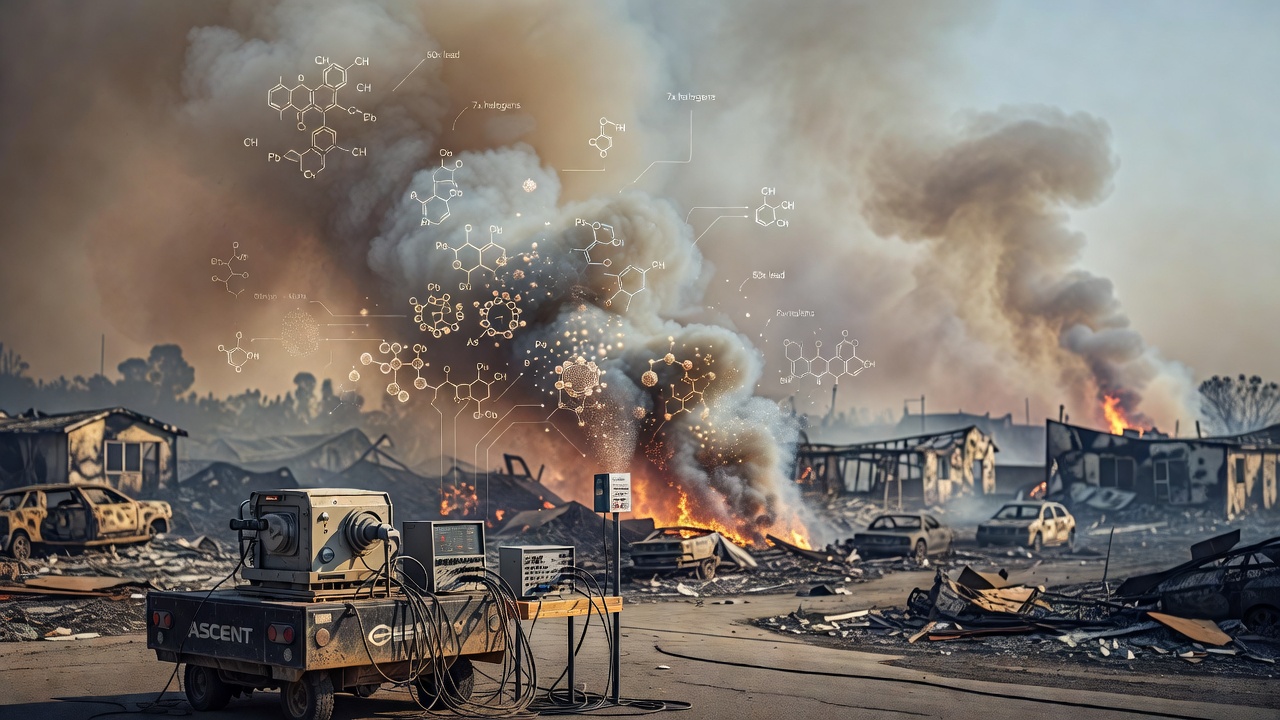
A new analysis of the January 2025 Eaton and Palisades fires finds that smoke from burning homes and vehicles carried far more lead, arsenic and halogens than typical wildfire smoke. Caltech researchers estimate roughly 7 million people were exposed for 24 hours to lead concentrations more than 80 times above normal background levels during the fires' peak.
How researchers measured the smoke
Using real-time instruments from the Atmospheric Science and Chemistry mEasurement NeTwork (ASCENT), scientists tracked the chemical makeup of fine particulate matter, known as PM2.5, hour by hour during the fires. That level of detail let them distinguish emissions from burning structures - cars, paint, electronics and building materials - from smoke produced by burning vegetation alone. Study author Nga Lee "Sally" Ng said the technology allowed the team to "see the very detailed component of these particles that we are breathing."
To establish a comparison, researchers contrasted the Eaton Fire plume with smoke from a 2024 Riverside County wildfire that burned mostly vegetation. The urban fire plume contained roughly 50 times more lead, three times more arsenic and seven times more halogens, a category that includes chlorine and bromine, than the vegetation fire produced.
Why the chemical difference matters
Lead is a neurotoxin linked to developmental harm in children, lower IQ scores and elevated blood pressure in adults, though researchers say the health effects of brief but intense exposure spikes like this one remain poorly understood. Arsenic exposure is associated with increased cancer risk. Co-author Haroula Baliaka said the findings help fill a research gap on how urban fires differ chemically from wildland fires, a distinction likely to matter more as cities and wildlands increasingly overlap.
Outside experts not involved in the study, including USC's Ed Avol and Mount Sinai's Yaguang Wei, said the results are plausible given the volume of synthetic material consumed when homes and infrastructure burn, even if the scale of lead exposure is striking.
Implications for monitoring and public health response
The Eaton and Palisades fires killed at least 31 people and destroyed more than 16,000 structures, exposing millions of residents to smoke. Researchers say current air-quality monitoring, which often samples particulates only a few times a week, isn't built to capture fast-moving toxic spikes like those documented in this study. Wei said the findings support stronger investment in real-time wildfire monitoring, faster public alerts and expanded use of prescribed burns to reduce fuel loads before fires start.
Avol said the research underscores a broader challenge: homes are built with metals, plastics and other synthetic materials that aren't going away, so protecting residents will depend on better detection and response rather than eliminating the materials themselves.